Deep Ellum Neighborhood Guide, Block by Block
East of downtown, where blues history, brick warehouses, and a hundred hand-painted murals share the same six blocks, this is how to actually walk the district instead of just parking near it.
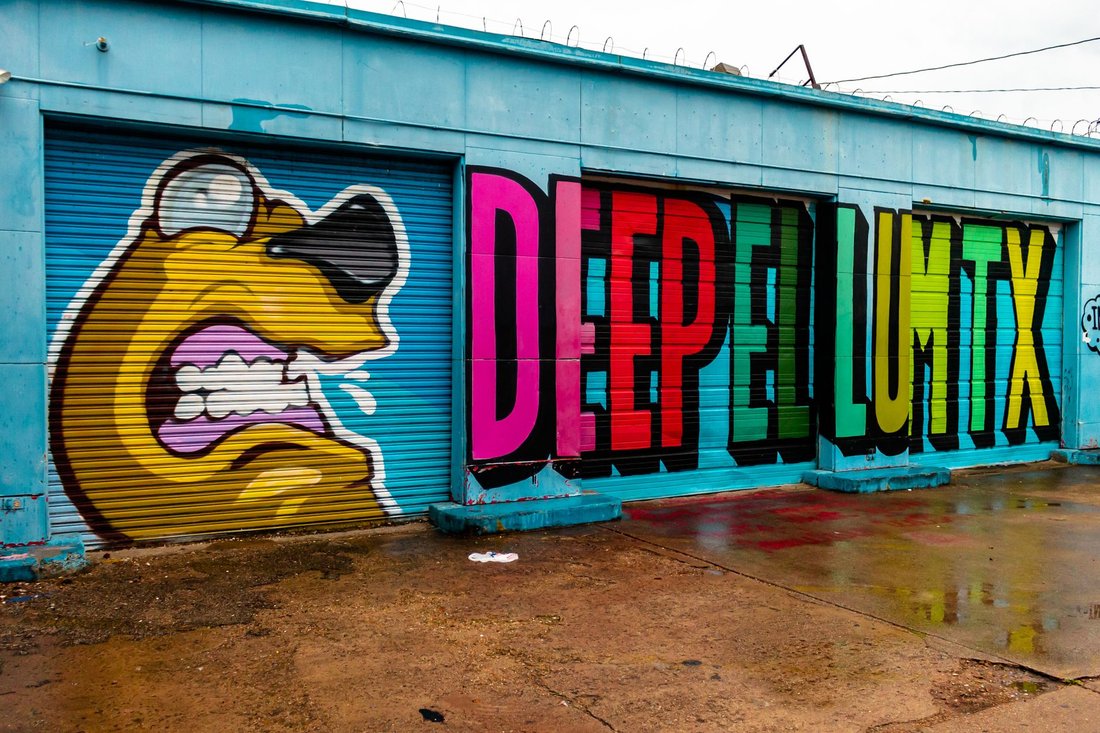
Elm Street still smells like fry oil and hot asphalt on a Saturday afternoon, guitar feedback leaking out of a club door two hours before anyone's supposed to be playing yet. That's the honest starting point for any deep ellum neighborhood guide: this isn't a district you photograph from a car window and check off. It rewards walking, doubling back, and noticing what's painted on the side of a building you already passed once. Deep Ellum sits just east of downtown Dallas, an easy DART ride or a straight shot down Elm from the Arts District, and it has been Dallas's most honest neighborhood for over a century, through blues clubs, warehouse decay, punk shows, and now a steady stream of new restaurants moving into old brick.
The name itself comes from Elm Street, filtered through the accent of the Black musicians and workers who built the district's identity in the early 1900s. Blind Lemon Jefferson made his name here, one of the blues and jazz musicians who worked the circuit running between Dallas, Memphis, and points south. That history isn't a plaque you glance at and move past. It's the reason live music still gets first priority on every block, the reason a neighborhood that could have been bulldozed for parking twice over instead kept rebuilding itself around a stage and a bar.
The Elm Street Spine
Elm is the main artery, and it's where most visitors start and, if they're not careful, where they also stop. Bars and music venues line both sides, ranging from decades-old rooms with sticky floors and real acoustic pedigree to newer builds chasing that same energy. Nights here run loud and late, especially on weekends when the sidewalks fill up between sets. During the day the same street is quieter and almost sleepy, restaurant patios setting up, delivery trucks idling outside kitchens prepping for the evening rush. Walk Elm once in daylight and once after nine and you'll swear they're different streets.
Commerce Street and the Warehouse Blocks
One block over, Commerce Street carries the district's industrial bones. Old warehouses and loading docks have been converted into breweries, event spaces, and galleries, and the ceilings tend to be higher, the rents presumably lower, the crowd a shade more local. This is where Deep Ellum's DIY streak still shows through the newer polish: a garage that became a taproom, a loading dock that became a patio. Fair warning that renovation is ongoing and constant here, so a building that was a gallery last year might be something else entirely now. That churn is part of the neighborhood's character rather than a flaw in it.
Main Street and the Mural Walk
Main Street and the alleys branching off it hold the bulk of Deep Ellum's outdoor art, murals stacked practically shoulder to shoulder across garage doors, brick facades, and entire building sides. Some are decades old and faded to pastel, others repainted within the last year, and the district treats the rotation as a living gallery rather than a fixed collection. Plan to spend an hour just walking the alleys with your phone camera out. Locals will tell you the murals change often enough that a guide printed even a year ago is already partly out of date, which is exactly the point. This is street art as an ongoing conversation, not a museum piece.
A Deep Ellum Neighborhood Guide to Eating and Drinking
Food here skews toward beef, brisket, and Tex-Mex done with a little more attitude than the suburbs allow, alongside a real craft beer and cocktail scene that predates most of Dallas catching on to either trend. Breakfast tacos show up on menus that have no business being that good this far from Oak Cliff. Expect kolache counters tucked between bars, barbecue joints with brisket opinions strong enough to start an argument, and a cocktail program in nearly every new bar that takes itself seriously without losing the neighborhood's unpretentious streak. If you want a gentler, more walkable version of that same independent food energy, Bishop Arts across the river runs a similar playbook with a different accent.
Getting There Without a Car
Deep Ellum has its own DART Green Line station, which makes it one of the rare Dallas neighborhoods where skipping the car entirely is not just possible but often the smarter move on a weekend night. The station drops you within a short walk of the main bar and mural blocks, so leaving the car at home is a real option on a busy night. Parking still exists, mostly in lots that fill fast and charge for the privilege, so factor that into any evening plan. For a city that outsiders assume runs entirely on freeways, Deep Ellum is a pretty direct rebuttal, and it sits close enough to downtown's Arts District that pairing the two in one day isn't a stretch.
A Few Ground Rules
- Weeknights are calmer and better for actually hearing a band without shouting over the crowd.
- Street murals rotate, so don't expect the exact wall you saw in a photo online.
- Cover charges at music venues are common and usually cash-friendly, worth having a little on hand.
- The neighborhood is walkable end to end in under twenty minutes, so there's rarely a reason to move the car once you've parked.
What makes Deep Ellum worth returning to isn't any single block. It's that the district still behaves like a neighborhood first and an attraction second, one that keeps painting over its own walls and reopening its own warehouses rather than freezing itself into a postcard version of 1920s Dallas. Go for the music, stay for the murals, and don't be surprised if the block you liked best changes its name before you make it back.